
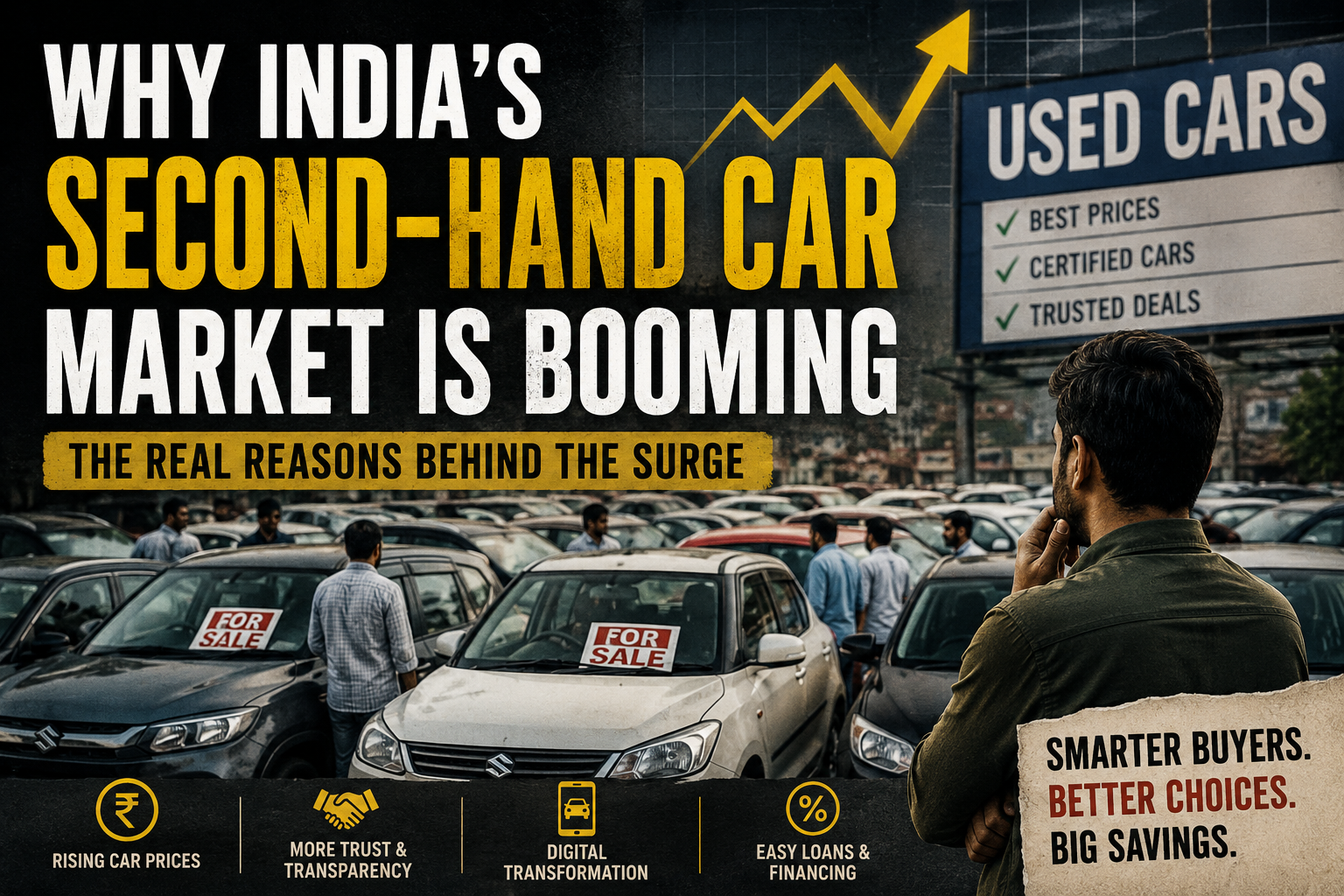
The Used Car Revolution: Why More Indians Are Buying Pre-Owned Cars Than Ever Before
A few years ago, owning a used car in India was often seen as a compromise. People preferred buying a brand-new vehicle, even if it meant stretching their budget or taking a larger loan. Fast forward to today, and the story has completely changed.
The Indian second-hand car market is experiencing an unprecedented boom. From first-time car buyers and young professionals to families and even car enthusiasts, more people are choosing pre-owned vehicles over brand-new ones. In fact, the used car market is growing faster than the new car market in many parts of the country.
But what exactly is driving this trend?
Let’s take a closer look.
The Rising Cost of New Cars
One of the biggest reasons behind the surge in used car sales is the rapidly increasing price of new vehicles.
Over the last few years, car manufacturers have had to comply with stricter emission norms, improved safety regulations, and rising raw material costs. While these changes have made cars safer and cleaner, they have also made them significantly more expensive.
A hatchback that once cost ₹4-5 lakh can now easily cross ₹7-8 lakh on-road. Similarly, compact SUVs and sedans have become substantially more expensive.
For many buyers, spending such a large amount on a new vehicle simply doesn’t make financial sense when a well-maintained used car can be purchased for 30-50% less.
Better Value for Money
Imagine buying a three-year-old car that originally cost ₹12 lakh for around ₹8 lakh.
That’s exactly what attracts many buyers.
A used car allows consumers to access better features, higher variants, automatic transmissions, sunroofs, premium interiors, and advanced safety features without paying the full showroom price.
Instead of purchasing a brand-new base model, buyers can often afford a higher-end variant in the used market.
For budget-conscious consumers, this is a winning proposition.
Depreciation Works in Favor of Buyers
A new car starts losing value the moment it leaves the dealership.
Most vehicles lose around 15-25% of their value in the first year itself and continue depreciating over time.
For used car buyers, this depreciation becomes an advantage.
Someone else has already absorbed the biggest financial loss, allowing the second owner to enjoy the vehicle at a significantly lower price.
This makes pre-owned cars one of the smartest purchases from a financial perspective.
Improved Trust in the Used Car Industry
Earlier, buying a used car often felt risky.
Questions such as:
- Has the odometer been tampered with?
- Was the car involved in an accident?
- Are there hidden mechanical problems?
These concerns prevented many people from entering the used car market.
Today, the situation is very different.
Certified pre-owned programs, vehicle history reports, multi-point inspections, warranties, and professional dealerships have increased transparency.
Buyers can now access detailed service records, ownership history, insurance details, and inspection reports before making a purchase.
This has significantly boosted consumer confidence.
The Digital Transformation
Technology has completely transformed the way Indians buy used cars.
A decade ago, buyers had to rely on newspaper classifieds, local dealers, or word-of-mouth recommendations.
Today, they can:
- Compare hundreds of listings online
- Check vehicle history
- Calculate loan eligibility
- Schedule inspections
- Complete documentation digitally
This convenience has made the buying process easier than ever before.
The ability to browse thousands of vehicles from a smartphone has dramatically expanded the market.
Growing Demand from First-Time Buyers
Many young Indians are purchasing their first car earlier than previous generations.
However, not everyone wants to spend a large amount on a brand-new vehicle.
For someone learning to drive or upgrading from a two-wheeler, a used car offers an affordable entry point into car ownership.
Many buyers prefer gaining experience with a pre-owned vehicle before investing in a new one later.
This trend is especially common among:
- College graduates
- Young professionals
- Newly married couples
- Small business owners
Easy Financing Options
Another major factor fueling growth is the availability of used car loans.
Banks and financial institutions now offer financing specifically designed for pre-owned vehicles.
Many lenders provide:
- Competitive interest rates
- Flexible repayment periods
- Quick approvals
- Minimal documentation
This has made second-hand cars accessible to a much larger segment of buyers.
A customer who cannot comfortably afford a ₹10 lakh new car may easily qualify for financing on a ₹5 lakh used vehicle.
SUVs and Premium Cars Are More Accessible
India’s love affair with SUVs continues to grow.
However, many premium SUVs remain out of reach for average buyers when purchased new.
The used car market changes this equation completely.
Vehicles that were once considered luxury purchases become surprisingly affordable after a few years of depreciation.
As a result, many consumers are upgrading from hatchbacks to compact SUVs and even premium vehicles through the pre-owned route.
The Pandemic Changed Consumer Behavior
The COVID-19 pandemic played a significant role in reshaping transportation preferences.
People became more conscious about personal mobility and hygiene.
Many individuals who previously relied on public transport started looking for affordable private transportation.
Since purchasing a new vehicle wasn’t always financially feasible, the used car market became the ideal solution.
This shift created a lasting increase in demand that continues even today.
Better Quality Cars Last Longer
Modern cars are built better than ever before.
With proper maintenance, many vehicles can comfortably run for 150,000 to 200,000 kilometers or more.
Because today’s cars are more reliable, buyers are increasingly comfortable purchasing vehicles that are three to seven years old.
A well-maintained used car can provide years of dependable service while costing significantly less than a new one.
Environmental Benefits
An often-overlooked advantage of buying a used car is sustainability.
Manufacturing a new vehicle requires enormous amounts of energy, raw materials, and resources.
When consumers purchase a pre-owned vehicle, they effectively extend the vehicle’s lifecycle and reduce the demand for additional manufacturing.
This makes buying a used car an environmentally responsible choice.
As awareness about sustainability grows, more buyers are considering the environmental impact of their purchasing decisions.
The Rise of Organized Used-Car Platforms
The Indian used-car ecosystem has become increasingly professional.
Organized players have introduced:
- Vehicle certification
- Warranty packages
- Return policies
- Transparent pricing
- Doorstep inspections
These improvements have transformed used-car buying from an uncertain experience into a structured and trustworthy process.
The result is a market that appeals to both buyers and sellers.
What Lies Ahead?
Industry experts believe the growth of India’s used car market is far from over.
Several factors are expected to continue driving demand:
- Rising new car prices
- Increasing urbanization
- Expanding financing options
- Growing trust in organized sellers
- Higher demand for personal mobility
As technology and transparency continue improving, the gap between buying a new car and a used car will narrow even further.
For many consumers, a certified pre-owned vehicle may soon become the default choice rather than the alternative.
Final Thoughts
The boom in India’s second-hand car market is not just a temporary trend—it’s a reflection of changing consumer priorities.
Today’s buyers are more financially aware, value-driven, and informed than ever before. They understand that a well-maintained used car can deliver nearly the same experience as a new one while saving lakhs of rupees.
As trust, technology, and affordability continue to improve, India’s used car market is likely to become one of the largest and fastest-growing automotive sectors in the country.
The question is no longer, “Why buy a used car?”
It’s becoming, “Why pay more for a new one?”
